

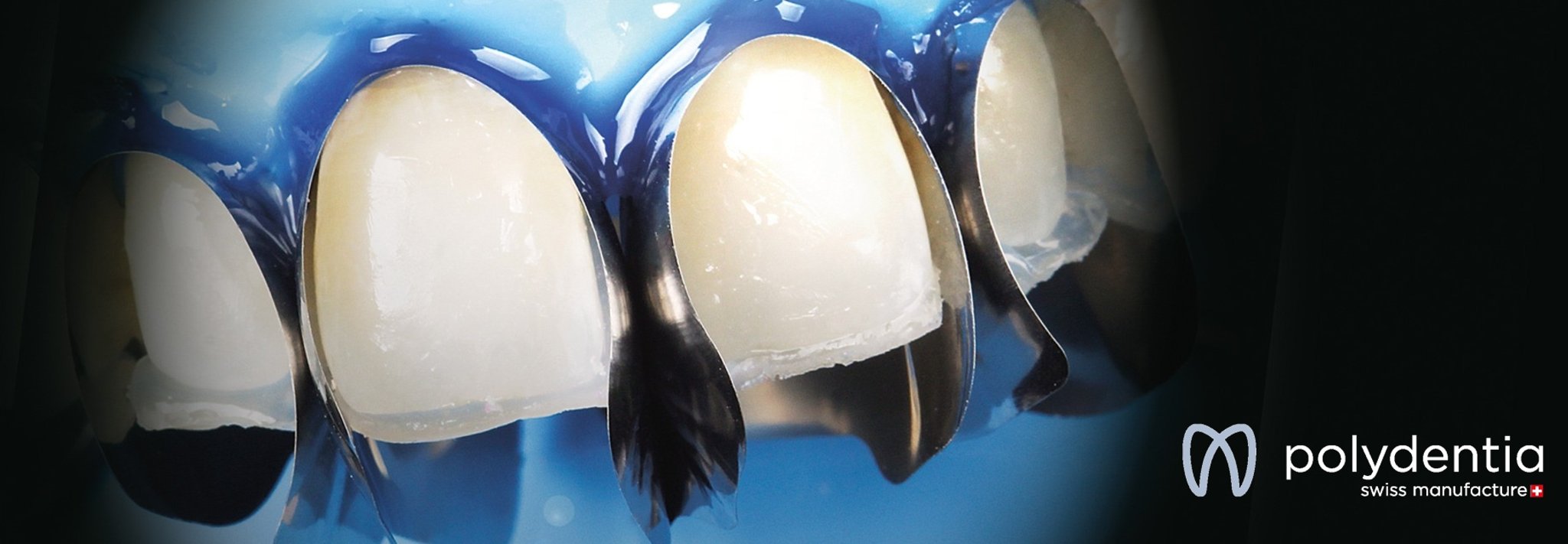

POLYDENTIA SA
Swiss manufacturer of high quality, innovative solutions for restorative and aesthetic dentistry
 You can find us at IDS 2027 in Cologne. Hall 10.2 | N041
Polydentia - Swiss manufacture since 1976 Polydentia is an internationally renowned Swiss manufacturer of restorative and aesthetic dental solutions. Polydentia started in 1976 as a family business and is now an operating company of the DirectaDentalGroup. We specialize in anterior and posterior direct restorative systems that guarantee the dentist reproducible, reliable and long-lasting results. Working in strict collaboration with professionals, Polydentia boasts a range of innovative products. These include the well-known Unica anterior matrices, which were developed in cooperation with StyleItaliano, as well as a collection of adult and paediatric posterior matrix systems that simplify your workflow and enable you to achieve predictable direct restorations. Building on fifty years of experience and know-how, Polydentia is committed to providing products of Swiss excellence to dentists worldwide who are looking for high-quality materials and customizable solutions at a fair price
Contact Person
HideShow

This company has not provided any direct contact information.
If you are the owner of this profile, you can add contacts here.
Categories
- Filling Instruments
- Handheld Instruments
- Dies/Die Holders
- Dental Materials
Product Highlights
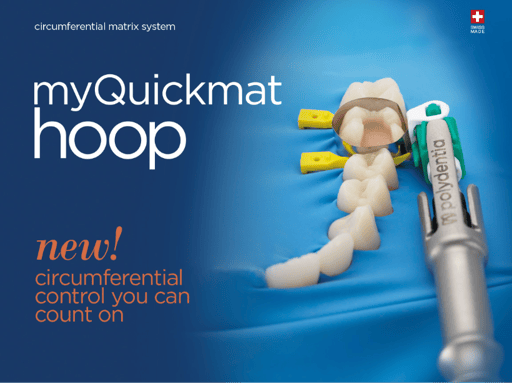
- myQuickmat Hoop circumferential matrix systemmyQuickmat Hoop is a circumferential matrix system that maintains the familiar workflow for placing a Tofflemire retainer while eliminating many of the limitations of conventional methods.View Product Details
-
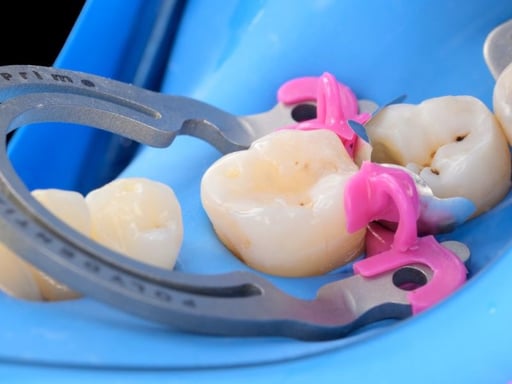 myQuickmat Prime sectional matrix systemmyQuickmat Prime is a sectional matrix system with integrated wedges that simplifies the entire Class II restoration procedure and reduces treatment time. By eliminating the step of inserting the wedges, the system is simpler, faster, and more efficient.View Product Details
-
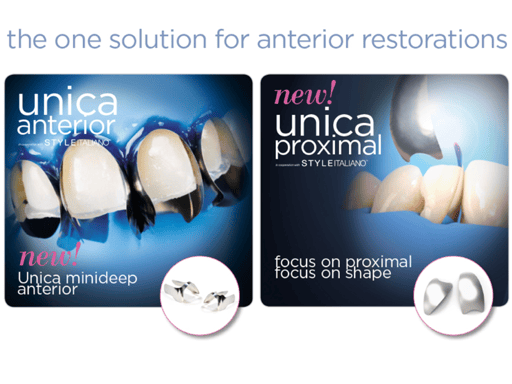 Unica master kitBecome a Master of Anterior Tooth RestorationView Product Details
-
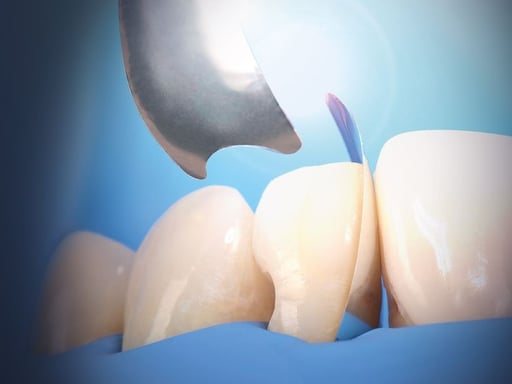 Unica Proximal anterior matricesFocus on the proximal Concentrate on the shapeView Product Details
-
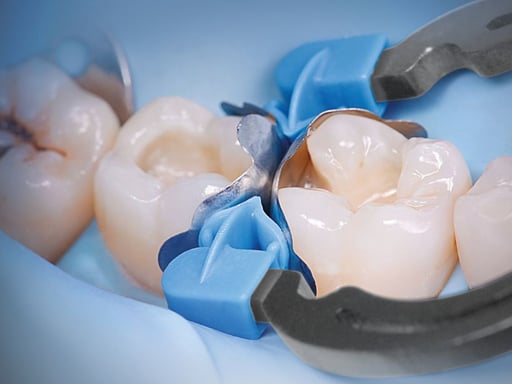 QuickmatFIT anatomical sectional matricesAnatomical cutting dies made of stainless steelView Product Details
-
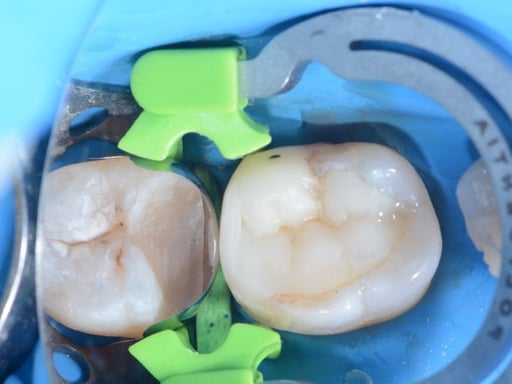 myTines GOPolydentia is launching the new myTines GO extensions, which improve the stability of its partial matrix rings.View Product Details
-
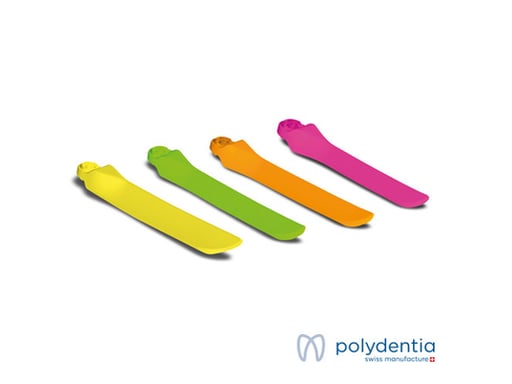 myWedgemyWedge is an interdental wedge made of high-tech plastic. Its innovative hollow V-shape allows it to compress and adapt to the interproximal anatomy of the teeth. It prevents damage to the papilla during insertion and shaping.View Product Details
Catalogs

POLYDENTIA SA-News
-
Polydentia Launches myQuickmat Hoop: A Reliable Way to Measure Tooth Circumference
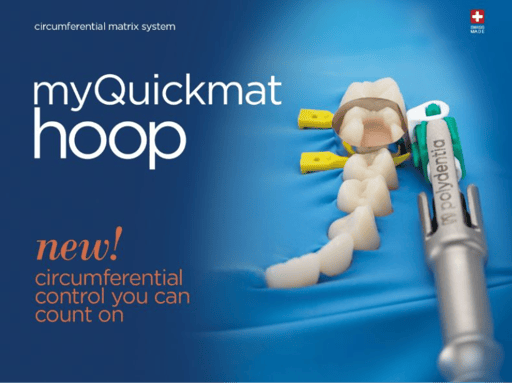
Circumferential matrix systems continue to play an important role in Class II restorations. Although sectional systems have become established in recent years, circumferential matrices still account for approximately 30% of the global matrix market* and remain a proven choice, particularly in public health systems and clinics with high treatment volume. Development opportunities in traditional circumferential matrix systems Conventional circumferential matrix techniques, such as the Tofflemire system, have long been valued for their simplicity, familiarity and versatility. When applying them to Class II restorations, however, dentists may have difficulty consistently reproducing ideal tooth anatomy and achieving predictable proximal contacts. In some cases, restorations may appear flatter, and contact density is difficult to optimize.These deficiencies can lead to food retention, black triangles, plaque accumulation, patient discomfort and an increased risk of restoration failure.Moreover, isolation and margin control may require special attention, particularly in complex cases or in cases of misalignment of adjacent teeth. The size and stiffness of conventional matrix holders can also limit access for wedge placement and thus impair overall handling efficiency.¹ Why introduce a new circumferential matrix system?Because we identified an opportunity to improve the advantages that dentists already appreciate in circumferential systems while addressing the challenges they know. We examined solutions from every angle – 360° around the globe 😉 – to find a circumferential matrix system that combines reliability with exceptional user-friendliness and intuitive handling. The result is myQuickmat Hoop: a system that maintains the familiar workflow when inserting a Tofflemire retainer while eliminating many of the conventional limitations. With simple placement, anatomical contours, a compact design, rigid foil and full pivotability, myQuickmat Hoop sets new standards for modern circumferential matrix band systems. The system includes a selection of standard and tabbed, pre-tensioned circumferential matrices, an instrument, and interdental plastic wedges that serve to stabilize the matrices and separate adjacent teeth. Pre-tensioned circular matrices "Quickmat Hoop"The Quickmat Hoop is a pre-tensioned, contoured circular matrix designed for precision and consistent clinical results. The removable STAINLESS STEEL instrument (myHooper instrument) enables quick, intuitive placement using the Tofflemire technique, without a bulky retainer remaining in the patient's mouth. This avoids soft tissue impingement and prevents matrix slippage during the procedure.The color-coded, adjustable retainer sits securely without loosening, while the pivoting arm allows insertion in any quadrant. Advantages:Simple insertion similar to Tofflemire retention, but without its disadvantagesRemovable instrument for quick insertion, tightening and customizationAnatomically shaped band for tight margins and natural restorationsCompact design, ideal for tight spaces, including second and third molars35-micron rigid, contoured foil: stable, dimensionally stable and passes easily through tight contactsColor-coded, adjustable plastic retainer that sits securely without looseningSwivelable retainer arm for insertion in any quadrant Sizes and executionsThe pre-tensioned Quickmat Hoop circumferential matrices are available in two circumferential sizes and three height variants (5.5, 6.5, 8.0 mm):The large size is primarily designed for molars.The small size is suitable for both premolars and smaller molars.The shape at the base of the band initially tapers and then expands again. It mimics the shape of a normal tooth, which as is known does not stand vertically. Control Hoop Tabs for demanding casesIn complex clinical situations or in cases of misalignment of adjacent teeth, it can still be difficult to achieve optimal adaptation and firm contacts. To counteract this, the band is also available with Control Hoop tabs, which were specifically developed to enable reliable, tight contacts in large, multi-surface composite restorations.Open contacts often occur when the matrix band unintentionally separates from adjacent teeth. The tabs can be gently pulled with a probe during light curing to maintain firm contact and ensure tight interproximal contacts. Alternatively, they can be temporarily bonded with an adhesive and flowable composite to the occlusal surfaces of adjacent teeth, which allows simultaneous filling and curing of both the mesial and distal boxes, saving valuable clinical time. A complete matrix solutionThe myQuickmat Hoop Set includes a selection of 40 standard and tabbed matrices, 2 instruments, and a pack of 100 mixed myHoopy plastic wedges that serve to stabilize the matrices and separate the adjacent tooth. The myHoopy wedge provides reliable separation, effective tissue compression and a secure matrix closure to prevent fluid ingress. Its parallel walls and gradually increasing rigidity enable smooth insertion and firm stabilization once in position. A ski jump tip protects the papillae, while the ergonomic handle – with integrated stops and an insertion opening – enables controlled, precise handling. Learn on the corresponding product page how your daily restoration routine benefits from using the myQuickmat Hoop circumferential matrix system. For demonstrations and/or sales inquiries, please contact your preferred international distributor of Polydentia. Please note that product availability is currently limited to the EU, Switzerland and the United Kingdom. Follow us on social media to receive the latest product updates, clinical case examples and other exclusive content
-
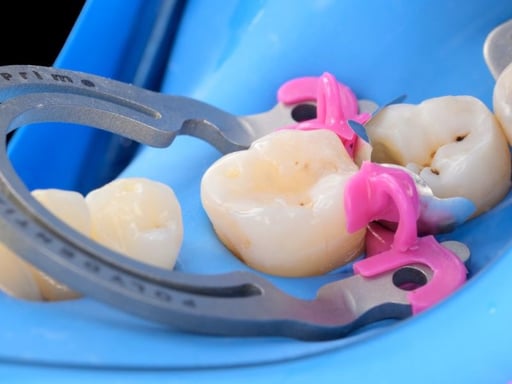
No More Wedges: Introducing the Polydentia myQuickmat Prime
Restoring the patient's lost natural interproximal anatomy is one of the most important challenges in dentistry today. To achieve satisfactory restoration of an approximal surface, several criteria must be met, including anatomically correct contour and narrow contact area, adequate marginal fit, and precise positioning of the marginal ridge. Deficiencies in these areas have significant clinical implications.1 Most clinics report that reconstructing a satisfactory approximal direct posterior restoration can be a difficult, time-consuming and often financially unrewarding procedure. Sectional matrix systems are the preferred option. However, they are technically sensitive, which can present a hurdle for inexperienced users. Matrices undergo deformation during placement and stabilization as well as during application of the restorative material.2 This can lead to unwanted and clinically relevant problems in the resulting restorations.1,2 Material stabilization is the most important aspect. For this purpose, wedges, separation rings, Teflon tape and blocking or flowing resin can be used. Wedges are the most commonly used aids to achieve both matrix stabilization and cervical seal.3 In particular, the use of plastic wedges enables engagement around the cervical curvature, but only synchronous positioning from both sides provides better cervical fit.2 To date, there are no specific protocols for correct wedge selection, and the wedge is often placed automatically without much attention or time devoted to it. The wedge is visually selected based on the size that the clinician considers approximately correct, and often multiple sizes must be tried. This not only costs time but also increases the risk of tissue damage.3 With the advancement of modern orthopaedics, there is a rapid stream of product developments to improve efficiency and aesthetics. myQuickmat Prime by Polydentia is a new sectional matrix system developed to simplify the entire restoration process and reduce chair-side time while ensuring correct interdental anatomy. The system is a clear example of uncompromising simplicity and consists of a separation ring (myRing Prime), a ring terminus with integrated wedge (myTines Prime), and a formed matrix for premolars and molars (Quickmat Prime anatomical sectional matrix). The new system eliminates the separate wedge step without losing the important function of the wedge. A closer look at the system reveals myRing Prime, a uniquely designed sectional matrix ring with an integrated wedge at the ends (myTines Prime), which facilitates treatment of Class II posterior cavities. The stainless steel ring is bent so that it does not conflict with adjacent teeth. It can be opened and positioned with normal rubber dam clamps or the Polydentia myForceps. The myRing Prime with its reusable and autoclavable wedge-shaped (or flamingo-shaped) ends provides efficient bilateral separation of adjacent teeth and ensures optimal cervical seal and matrix adaptation at and between premolars and molars. The self-centering capability makes positioning extremely simple, as the bilateral cervical portions guide insertion naturally without the risk of mispositioning. The tip head adapts the matrix to ensure correct proximal curvature toward the marginal ridge. Overall, the design of the ring + terminus duo prevents slippage of the ring from the approximal area, as can occur with other rings (the wedges hold it firmly in place). Redesigning the wedge as part of the restoration procedure makes the system simpler, faster, and smarter than conventional sectional matrix systems. It reduces operative time and wedge wear2 without compromising performance. In short, it eliminates stress! The system also includes the anatomical Quickmat Prime sectional matrices, which are rigid and easy to polish and are available in one thickness (0.04 mm) and shape for premolars and molars. The matrix has a more pronounced contour from cervical to occlusal compared to other matrices, which enables precise positioning of the contact point near the equator and naturally curved anatomy. The upper central tab facilitates positioning of the matrix with or without myQuickmatrix forceps or forceps with angled tip. Polydentia's myQuickmat Prime makes no compromises in terms of efficiency or performance: the result is simpler and more natural treatment of proximal anatomy. Advantages: - simplified posterior system that reduces insertion time - essential elements for treatment: one ring, one ring terminus with integrated wedges and a formed matrix (no separate wedge required) - self-centering wedge ends: guide insertion naturally and ensure effective bilateral separation of adjacent teeth with optimal matrix fit and cervical seal - ring stability: prevents slippage of the ring - cervical to occlusal formed matrix enables precise positioning of the contact point near the equator - no compromises on efficiency and performance: the result is simpler, more natural restoration of proximal anatomy "myQuickmat Prime is a revolutionary concept that not only simplifies the protocol for Class II posterior restorations but also makes the entire process simpler and faster. Correct approximal contact curvature has always been a challenge in Class II restorations, but with the combination of the new Quickmat Prime and myRing Prime it has never been so easy and convenient. In short, a real breakthrough for my Class II restorations". Dr. Javier Tapia myRing Prime is easy to position even in the presence of rubber dam clamps or misaligned teeth. Optimal restoration can be achieved by using myRing Prime with the anatomical Quickmat Prime sectional matrices. However, all other Polydentia sectional matrices can be used with myRing Prime and the anatomical Quickmat Prime sectional matrices can be used with other sectional matrix rings (myRing Forte, myRing Classico). The product will be available from June 2025 through the Polydentia dealer network. The system is available as a kit and as refill packs (ring, ends, matrices). What is new about this novelty is that the kit is supplied in a new luxury box by Polydentia brand with reusable trays in which the units can be housed so they are always at hand. The box and trays are dimensioned to fit securely in cabinet drawers and are made of recyclable and cleanable materials. Sectional matrix system myQuickmat Prime Simpler, faster, smarter Visit our dedicated product page to learn more about myQuickmat Prime, our new matrix system for the posterior region. For demonstrations and/or sales inquiries, please contact your preferred international Polydentia distribution partner. Follow Polydentia on social media for the latest product updates, clinical cases and other exclusive content. References: 1 Peumans M, Venuti P, Politano G, Van Meerbeek B. Effective protocol for daily high-quality composite restorations in the posterior region. The interdental anatomy of Class 2 composite restorations. J Adhes Dent. 2021;23(1):21-34. doi: 10.3290/j.jad.b916819. PMID: 33512113. 2 Bailey O. Sectional matrix solutions: the distorted truth. Br Dent J. 2021 Nov;231(9):547-555. doi: 10.1038/s41415-021-3608-5. Epub 2021 Nov 12. PMID: 34773017; PMCID: PMC8589656. 3 Gancedo-Gancedo, T.; Martín-Biedma, B.; Domínguez-Cachón, J.; Garrido-Parada, S.; Ababii, V.; Pereira-Lores, P.; García-Varela, S.; Castelo-Baz, P. New Technique for Wedge Selection in Direct Class II Restorations: A Pilot Study. J. Clin. Med. 2024, 13, 1324. https://doi.org/10.3390/jcm13051324 .
-
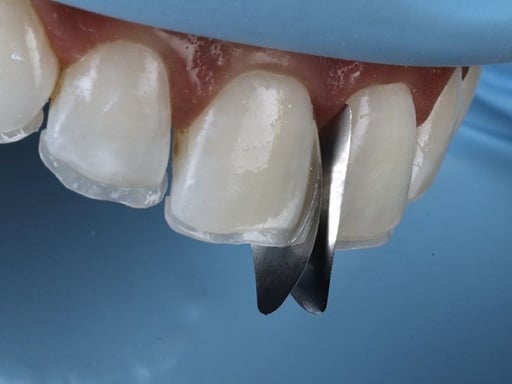
Polydentia introduces the Unica Master Kit, everything you need for anterior restorations
The Unica anterior matrices and Unica Proximal, developed in collaboration with StyleItaliano, have revolutionized the approach to anterior restorations. As prime examples of the StyleItaliano motto "doable, teachable and repeatable," the Unica matrices were immediately successful in the market thanks to their ease of use and performance results. The new Unica Master Kit offers a Featured selection of essential elements for complete control of anterior restorations and complements the Unica Introkit line of anterior restoration Systems. The kit contains the Unica, Unica Minideep, Unica Proximal and Unica Proximal deep versions as well as a Featured selection of myWedges that can be used as needed. The selection of essentials makes it possible to cover a broad spectrum of Indications: from direct layering of composite veneers (partial and complete); shape modification (i.e., diastema closure); What's new: The Products are supplied in a new luxury box by the Polydentia brand with reusable trays in which the units can be stored so they are always at hand. The box and trays are sized to fit securely in standard drawer compartments and are made of recyclable and cleanable Materials. "The Unica Master Kit is a valuable treasure chest," says Andrea Cenacchi de Polzer, International Sales Manager at Polydentia - "The new box contains an optimized Featured selection of easy-to-use Unica matrices that enable the reconstruction of correct and aesthetic interproximal and cervical margins, regardless of which anterior Tooth you are treating." Benefits: - all essentials for anterior restorations at hand - reconstructs correct and aesthetic interproximal and cervical margins - cost-effective - clean and secure storage of selected Products - reusable and cleanable trays - fits in standard drawers Learn more about the Products: Unica anterior is the simple and ideal System for anterior restorations such as Class III, IV, V, direct layerings, composite veneers and shape modifications. Its matrix solutions, Unica anterior and Unica minideep anterior, adapt correctly to the various morphologies of all anterior Teeth thanks to their contoured Shape. They allow the clinician to restore the proximal and cervical margins simultaneously, even in the presence of gingival retraction cord or cofferdam, which significantly reduces treatment time. Furthermore, with Unica anterior the final Shape of the restoration can be easily visualized after insertion, even before the procedure begins. Unica Proximal matrices are designed to adapt to the labial, palatal and proximal contour of anterior Teeth. Unica Proximal matrices are particularly suitable for anterior restorations in the interproximal Area (Class III and IV, lateral incisors in post form, diastema closures, partial and full veneers). The easy-to-place cervical labiopalatal arch is designed to Fixate the matrix between papilla and Tooth subgingivally to improve matrix stability after insertion. A wedge can be used for Fixation of the matrix, but is not mandatory. The Shape of the matrix was designed to fit optimally to anterior Teeth and provides better visibility and access to the operative field than other solutions such as matrices in the posterior Tooth Area. Unica and Unica-Minideep matrices can prove very useful when it comes to challenging cases where the cervical and proximal Area needs to be restored (complete veneer). Unica Proximal is the ideal matrix to restore only the interproximal margins without including the cervical Area when unobstructed access and clear visibility are essential for a successful procedure, even when working mesially and distally simultaneously. The Unica matrices can be used with or without a plastic wedge. myWedge is an interproximal wedge made of modern plastic. Its innovative hollow V-Shape enables it to compress and adapt to the interproximal anatomy of the Teeth. It prevents damage to the papilla while adapting and shaping the matrix band to the anatomy of the cervical Area of the Tooth, making it ideal for the anterior Area as well. The unique round-head geometry of myWedge was developed for easy handling, placement and removal of the wedge with any standard forceps or pliers. With the introduction of the Unica Master Kit, clinicians can now choose from an expanded range of matrices to cover all anterior restoration situations. The product is available from June 2025 through the Polydentia dealer network. Visit the dedicated product page to learn how direct composite restorations, especially in aesthetic Areas, can be placed with the expanded range of Unica anterior matrices. For demonstrations and/or sales inquiries, please contact your preferred international Polydentia distribution partner. Follow Polydentia on social media for the latest product updates, clinical cases and other exclusive content.
-
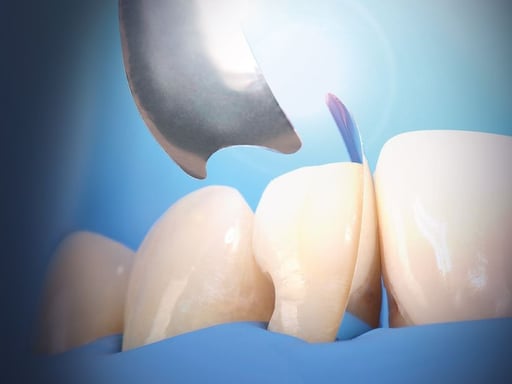
Polydentia is expanding its line of anterior matrices with the introduction of Unica Proximal
Direct restorations in the anterior tooth area have become a reliable alternative with good long-term prognosis, thanks to the composite materials now available, which are capable of mimicking the aesthetics and function of natural teeth.1This minimally invasive approach aims to achieve tooth symmetry and improve aesthetics by enabling the correction of irregular tooth shape and position as well as discoloration. It is reversible, repairable, cost-effective and time-saving.2 It is important that direct restorations have correct anatomical contours and interproximal contacts. Due to their simplicity and versatility, anatomical matrix systems and injectable impression technique are the most commonly used methods for redesigning the approximal areas of anterior teeth.2 Matrix systems in the anterior tooth area are numerous in terms of creativity, but most can be divided into flexible and rigid. Flexible matrices include the popular Mylar strips and soft splint templates, which can present a challenge as they are not able to contour large areas, resulting in irregular contours and contacts. Rigid matrices include putty indices and precontoured matrices for the posterior tooth area, both viable options in certain situations, but in most cases matrices for the posterior tooth area are cumbersome and difficult to handle when multiple surfaces are to be restored.3 Developed in collaboration with StyleItaliano, Unica Proximal offers enhanced control in anterior tooth restorations. This new anterior tooth matrix by Polydentia eliminates the need to cut or modify existing posterior tooth matrices and offers a shape that ensures simple and secure customization and fit in the anterior tooth area while eliminating the unnecessary labial, palatal and incisal extension of conventional matrices.Its universal shape and contour for upper and lower mesial and distal teeth significantly simplifies and accelerates anterior tooth restorations. Unica Proximal stainless steel matrices have a thickness of 0.03 mm and are available in two shapes (Standard and Deep), which adapt labially, palatally and proximally to the contour of the anterior teeth.Unica Proximal matrices are particularly suitable for anterior tooth restorations in the approximal area (Class III and IV, pin-shaped lateral incisors, diastema closure, partial and full veneers).The easily placed cervical labiopalatal arch is designed to secure the matrix between the papilla and the tooth subgingivally to improve matrix stability after insertion. A wedge can be used to fixate the matrix, but is not mandatory.The design of the matrix was conceived to optimally fit the anterior teeth and provide better visibility and access to the operative field than other solutions such as posterior tooth area matrices. Advantages:- true-to-original reproduction of the labial, palatal and approximal contours- enables unobstructed visibility and access to the operative field, even when multiple matrices are used simultaneously- self-stabilizing: after insertion, the matrix remains stable and secured throughout the procedure, with a wedge used if required- longer cervical extensions than with posterior section matrices, for easy restoration of the cervical part of the proximal contour- available in two sizes (Standard and Deep), to ensure optimal customization to different incisor morphologies The two universal shapes of Unica Proximal cover all clinical situations: Unica Proximal for standard cases and Unica Proximal Deep for perio applications with shallow papilla.The thickness of the matrix (0.03 mm) provides an optimal combination of moldability (polishing) and rigidity. With the introduction of Unica Proximal, clinicians can now choose from an expanded matrix range that covers all anterior tooth restoration situations. Unica and Unica Minideep matrices can prove very useful when it comes to challenging cases requiring restoration in the cervical and approximal area (full veneer).Unica Proximal is the ideal matrix to restore only the interproximal edges without including the cervical area when unobstructed access and clear visibility are essential for a successful procedure, even when working mesially and distally simultaneously. Visit the corresponding product page to find out how direct composite restorations, particularly in aesthetic areas, can be placed with Unica Proximal anterior tooth matrices. For demonstrations and/or sales inquiries, please contact your preferred international Polydentia distribution partner. Follow Polydentia on social media for the latest product updates, clinical cases and other exclusive content.
-
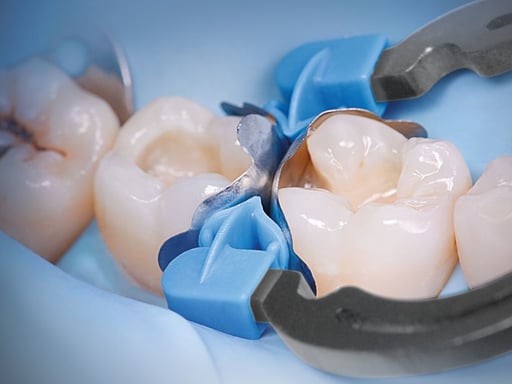
QuickmatFIT, an anatomically shaped matrix for precise, natural contours
Achieving proper contacts in Class II cavities is the most challenging clinically relevant aspect for clinicians.A clinical study reports that 2.9% of failures in direct restorations are attributable to an unsatisfactory contact point or margin.1 Problems resulting from an inadequate contact surface include displacement, lifting forces, food impaction, difficulty flossing, reduced effectiveness of toothbrushing, and increased plaque accumulation.This leads to periodontal damage characterized by pain, inflammation, and bleeding.2,3 Restoring the anatomy of the missing tooth is important not only to replace the missing structures but also to restore ideal form and function.Selecting a matrix capable of mimicking or reproducing the tooth’s original morphology and curvature is the first step toward a successful aesthetic and functional restoration. Sectional matrices are typically used in combination with a separator ring, which separates the teeth and stabilizes the matrix coronally, thereby facilitating the formation of a contact surface.4,5By engaging the interproximal recesses and applying force to the remaining tooth structure, these systems efficiently increase contact tightness compared to standard matrices or circumferential matrix systems.4,5A restoration with the correct anatomical shape also reduces the need for rotary instruments required for contouring and finishing, thereby saving valuable time for both the dentist and the patient. QuickmatFIT by Polydentia are the new anatomically enhanced stainless steel matrices with a thickness of 0.04 mm, available in three anatomical shapes to cover all types of Class II posterior restorations. QuickmatFIT matrices are particularly indicated for wide interproximal spaces and large cavities. Thanks to their placement tabs, QuickmatFIT matrices are easy to handle and feature a rolled occlusal edge for easy marginal preparation. The accentuated curvature of the matrix fits snugly against the tooth, ensuring an improved fit and stability*, which makes it easier to achieve the correct restoration anatomy. Advantages:- Improved natural curvature: 3D-contoured matrices ensure anatomically correct restorations- Easy handling: The placement tabs (occlusal/buccal/lingual) allow for easier and faster insertion and removal of the matrices (the tip is easy to grasp with tweezers for correct positioning)- Time-saving solution: anatomically precise restorations reduce the time required for shaping and finishing- Three matrix shapes (premolar, molar, and deep molar)—thin, rigid, yet burnable—deep molar version for effective cervical margin seal With the introduction of QuickmatFIT, clinicians can now choose the Polydentia matrix that best meets their requirements in terms of height, thickness, concavity, and distance to the adjacent tooth. Using an anatomically enhanced QuickmatFIT sectional matrix in combination with a sectional matrix ring (myQuickmat Forte Ring with myTines extensions) and interdental wedges (myWedge V-shaped plastic wedges) as part of a complete sectional matrix system ensures the successful restoration of Class II cavities with natural tooth anatomy. Visit the corresponding product page to discover how your daily restoration routine can benefit from using the anatomically enhanced QuickmatFIT Sectional Matrices. For demonstrations and/or sales inquiries, please contact your preferred international Polydentia sales partner. Follow Polydentia on social media for the latest product updates, clinical cases, and other exclusive content.
-
Polydentia is expanding its portfolio of solutions for matrix systems
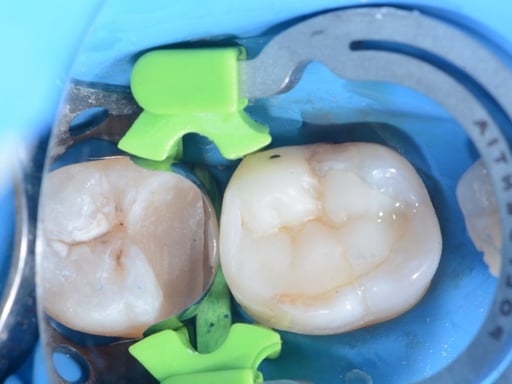
Polydentia is launching new myTines GO tips that improve the stability of its sectional matrix rings. Developed in collaboration with StyleItaliano, the new myTines GO represent a step forward in ring stabilization and restoration performance, surpassing previous sectional matrix systems. myTines GO are versatile tips for myRing Forte and myClip 2.0, designed to precisely adapt Polydentia’s sectional matrices to a wide range of clinical situations and tooth heights.Particularly indicated for wide and extremely wide cavities, missing cusps, and malocclusions*, myTines GO adhere to the teeth well away from the contact point, optimizing stability and enabling a harmonious concavity of the matrix. myTines GO are compatible with and provide a stable fit with myRing Forte and myClip 2.0, reducing the risk of the ring detaching once it is in place. Advantages: Interchangeable, replaceable, and autoclavable plastic tips—Increased ring stability**: stable positioning, particularly in large and extremely large cavities, missing cusps, and malocclusions*.- Grip on teeth away from the contact point: Optimizes stability and enables a harmonious concavity of the matrix—V-shape for better positioning on the wedge. With myTines GO, the rings are also stackable, meaning multiple rings can be stacked on top of each other, which enables MOD (mesial-occlusal-distal) cavity preparation. myTines GO vs. myTines S, M, L myTines GO - NEW: Wide and very wide cavities; missing cusps; misaligned teeth*; wide interdental spaces myTines S & M: Standard Class II cavities; aligned teeth; standard interdental spaces Note: When choosing between small and medium myTines, the height of the myTines must be less than the height of the tooth. myTines L: Wide cavities; missing cusps; straight teeth; standard interdental spaces. In cases of uneven tooth morphology, myTines GO can be combined with myTines Small and Medium on the same Polydentia profile matrix ring. myTines GO is the ideal complement to the recently introduced anatomically enlarged QuickmatFIT partial matrices. The lateral positioning tabs on the matrix and myTines GO’s ability to contact the tooth in healthy areas make the ring stable and help treat particularly large cavities with a gentle, natural curvature. With the introduction of myTines GO, clinicians can now choose from an expanded range of ring accessories that cover a wide spectrum of clinical situations. To learn more, visit the product page. For demonstrations and/or sales inquiries, please contact your preferred international Polydentia sales partner. Follow Polydentia on social media for the latest product updates, case studies, and other exclusive content. *Segment in labial to palatal position**Unlike myTines S, M, and L
Video
-
myQuickmat Prime - Split Matrix System with Integrated Wedges - Polydentia
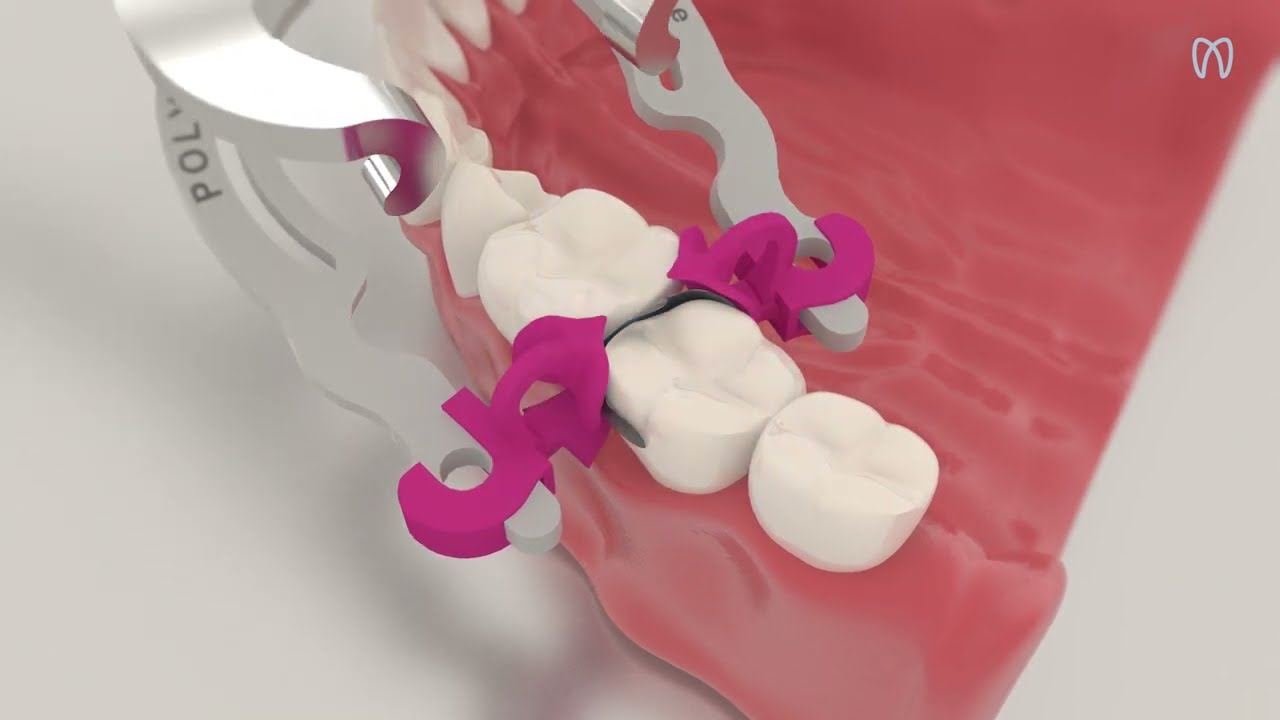
myQuickmat Prime is a sectional matrix system with integrated wedges that simplifies the entire Class II restoration procedure and reduces treatment time. By eliminating the step of inserting the wedges, the system is simpler, faster, and more efficient.
When the video is played, it is loaded from YouTube; this involves transferring data to YouTube.
Watch on YouTube (new tab)